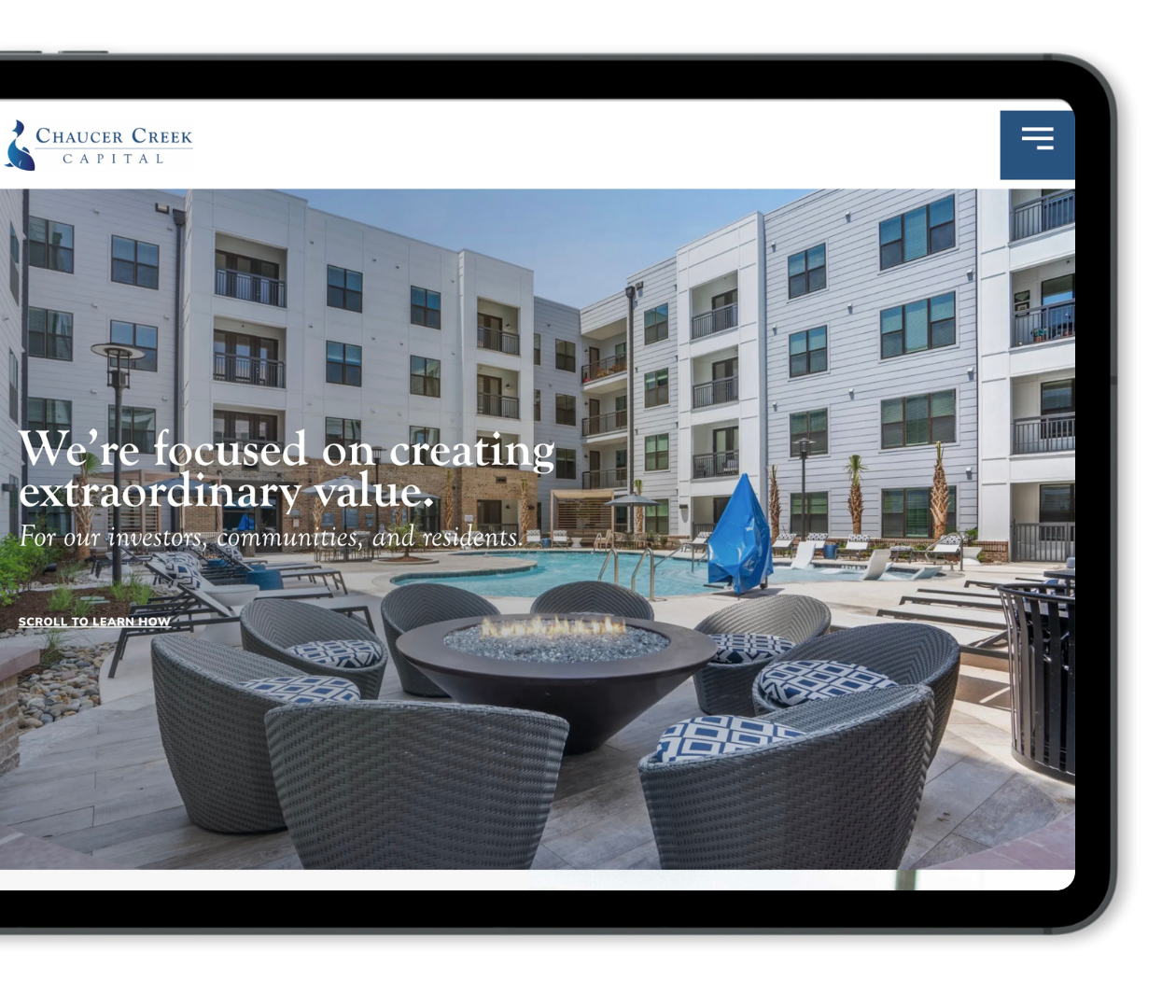
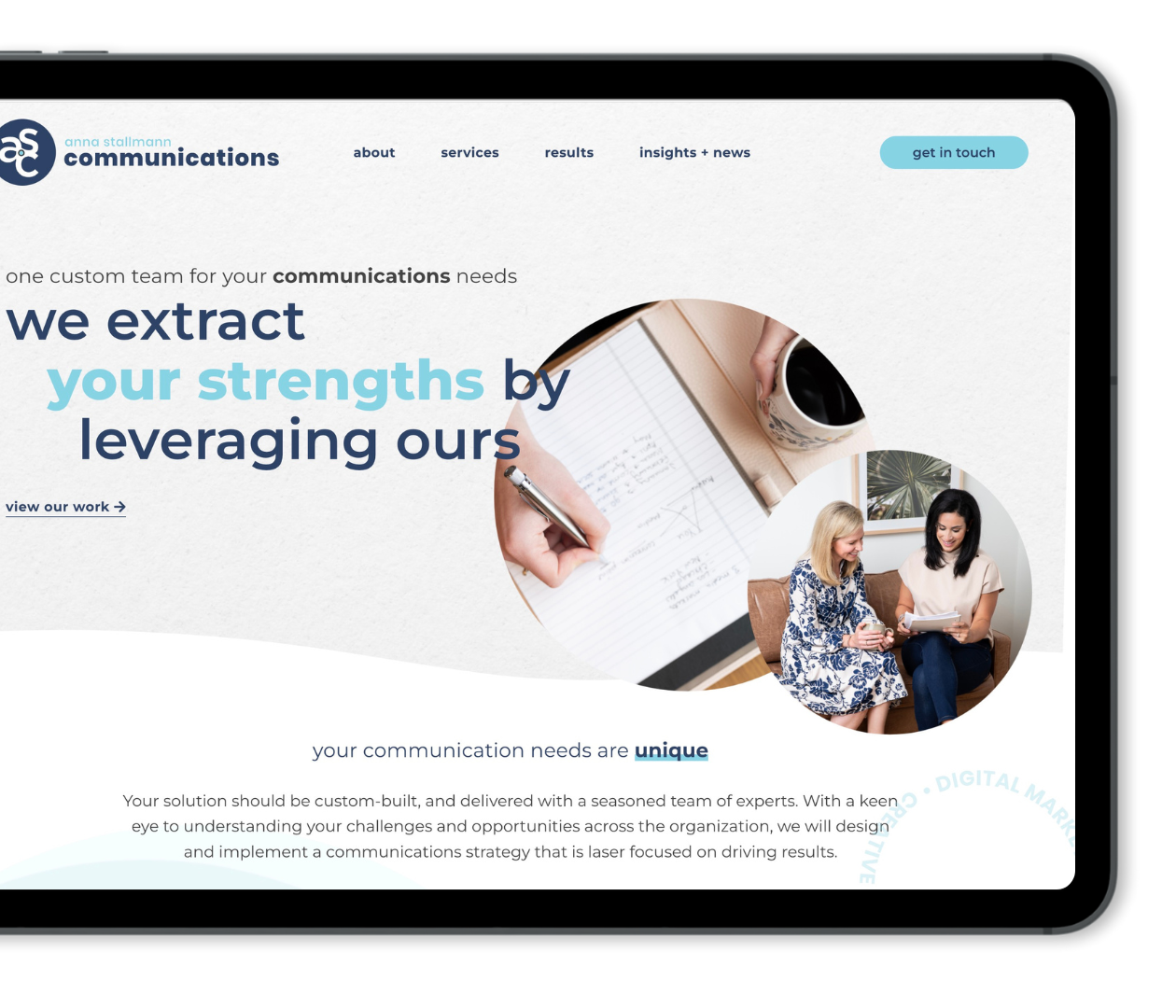
The difference between a website that was generated with AI and a website that was designed with intention is massive in our opinion. AI-generated designs can feel like a show home that’s been staged but was never meant to be lived in.
Recently I read a LinkedIn post from brand strategist Jacob Cass at Just Creative that was really meaningful on this exact topic. His point was simple: clients don’t just need design output. They need someone experienced in their field with taste, judgment and who can actually build something meaningful rather than just decorate it. His post was focused specifically on brand design, but it landed for me as a web designer too.
I do want to be clear, this isn’t a dismissal of AI as a tool. We use it ourselves every day at MJC. But there’s an assumption that a polished-looking website is the same thing as an effective one, and it’s not. Understanding that difference is exactly what separates a website that performs from one that just exists.
Strategic Thinking Still Sets You Apart
AI tools have raised the bar in the web design industry. And honestly, that isn’t a bad thing. AI has genuinely changed what is possible in web design.
Wireframes and prototypes that used to take days can now be completed in hours. Visual options that required a full creative team can be generated in minutes. Even a web designer with no design background can produce something that looks credible in a very short amount of time.
But looks aren’t everything when it comes to performance.
When the latest wave of AI design tools dropped and the familiar chorus started declaring that designers were obsolete, I didn’t feel threatened. I felt challenged to step up our game. Clients need someone who can spot what fits and what feels off, what earns trust and what quietly damages it, what aligns with where a business is going and what distracts from it. Not someone, or something, that can provide a basic output.
That is true across the creative industry. AI can generate a design but the real strategic thinking still requires the human element of an experienced designer.
Effective Web Design is Not a Production Task
Design is not simply about making things look good, it’s about making a long series of valuable decisions, each informed by what you know about the person on the other end of the screen and what you need them to feel and do.
Which element should a visitor’s eye land on first, and why? Where does trust need to be established before someone will scroll further? What does the firm’s positioning require in terms of visual aesthetic and hierarchy? Which pages should feel expansive and which should feel focused and direct?
Those are not production questions, they are strategic ones. And those answers require someone who understands both the business and the human behavior behind the decisions being made.
AI can execute on a direction once it exists, but the human element ensures the direction is set correctly.
What AI Web Design Tools Cannot Replicate
Taste is one of the harder things to develop, even for us as humans. It’s built over years of education and experience in the industry – paying attention, creating both good and bad things, studying what works and what doesn’t, and training the eye to notice the gap between good and great.
I think that’s precisely what AI tools can’t replicate. An AI tool can generate design work that is likely to look acceptable, or even great, visually. But these tools take the average across everything they’ve been trained on and output something that resembles the median of good design. Sometimes that’s useful, but the median is not the goal in web design for the clients we work with across AEC and B2B.
Our goal is a website that feels unmistakably and uniquely like their firm and the people behind it. A website where the right client lands on it and immediately thinks “these people understand me.” That kind of specificity, the visual and structural choices that signal to exactly the right person that they are in the right place, requires judgment that goes well beyond what any AI tool can supply alone.
Web Design Strategy Happens Before Visual Work Begins
When we start a web design project, the first phase has nothing to do with what the site is going to look like. It has everything to do with gaining a deep understanding of the business, their ideal audience, and the competitive landscape the company is operating in.
Who is arriving at this site and what do they already believe? What does this company want to be known for and is the current visual identity aligned with that? What action needs to happen on a specific page and what needs to be established before a visitor will take that action? What does this firm’s best clients have in common and how do we design an online experience that speaks directly to that?
These questions shape every design decision that follows; they determine the visual hierarchy on the homepage, they determine whether a services section leads with process or proof, they determine whether the overall aesthetic should feel technical or relationship-driven and they determine what gets featured and what gets edited out entirely.
AI can help generate options within a defined direction, however it can’t (yet, at least) do the strategic work that defines the design direction in the first place. The companies that get the most from a website investment are not the ones who find the fastest path to launching a finished design, they are the ones willing to dig in and do the hard thinking before anything gets built.
Website Conversion is a Human-Led Web Design Problem
There’s a tendency to treat conversion as a copywriting task, but conversion is so much more than the copy on your website.
Design is doing at least as much work as the words, and often more. For example, the visual weight of a call to action, the pacing of a page as someone scrolls through it, where social proof is placed relative to a moment of decision, the amount of friction or ease built into a contact form. All of these decisions paired with subtle signals from typography choices, spacing and color palettes tell a visitor whether a firm is credible, established and worth their time.
These are important and valuable design decisions. And they require an expert who understands both what needs to be achieved and how human attention and trust actually work.
Your website visitor decides within seconds whether to keep engaging or move on. And honestly, that decision is typically made before they read much of anything on he site. It’s made based on how the site feels, whether it signals competence and fit and whether it gives a reason to trust what follows. That’s the important work of a designer, and it’s not one that gets done by averaging across AI training data.
What AI Can and Cannot Do in a Web Design Project
To be fair, here is where AI genuinely helps in our web design process.
We use AI tools to accelerate exploration in the early stages, helping us generate and evaluate structural options more quickly. It’s extremely useful for producing variations on a visual direction once the direction is defined. And for certain production tasks, it removes friction and saves time that we can invest in the thought-based, strategic side of the work.
But an AI tool cannot own your brand or carry a company’s reputation. It can’t process the space between a company’s long-term business goals, client expectations, competitive positioning and the visual language that’s needed to hold all of that together. It can’t make a judgment call between one idea or the other. That’s the space where design strategy thrives, and it’s still entirely a human job.
These tools also can’t develop the relationship with a client that makes great design possible. Some of the most important moments in a web project happen throughout conversations, when clients say something offhand that reveals exactly what their best clients value about working with them, or when a review session reveals a tension between how a company sees itself and how it wants to be perceived. Those moments require presence and experienced judgment.
Invest in Human-Centered Web Design
The most effective websites we’ve built share a characteristic that has nothing to do with which design tools were used, what platform the site is built on or how quickly the project moved. These websites are built around a clear understanding of the person on the other end of the screen, what they care about, what they are evaluating and what would make them feel confident enough to reach out.
That understanding doesn’t come from a prompt, it’s developed from strategic thinking. From asking the hard questions at the beginning of a project instead of looking for shortcuts.
At MJC, we work primarily with firms in professional services, commercial real estate, architecture, engineering and construction. These are industries where high-level decision makers are researching and evaluating, where reputation comes first, and where the difference between a website that generates leads and one that simply exists is almost always a strategy and design problem.
The question a good website answers is not just “can this firm do the work?“, it’s “do these people understand our needs and industry” Answering that through design, with every visual choice and structural decision, takes judgment, experience and attention to the business. It takes someone who has paid attention to what actually builds trust in your specific industry and knows how to translate that into a thoughtfully designed experience.
AI can support that process, but it can’t drive it.
“The longest distance between two points is a shortcut” – John C. Maxwell
What to Look for When Planning a Website Redesign
If you’re heading into a website project, be skeptical of any process that jumps straight to design before doing the important strategic work. Be skeptical of websites that look current but feel similar to every other firm in your industry. The work that actually determines whether a website performs is the human-led strategic work at the beginning of a project, not the pace of production work.
The companies that get the most out of a website investment are the ones willing to do the hard thinking upfront. Who are we designing this for and what do we want them to feel when they land here? What makes our firm different in a way that’s visible and credible and not generic?
Those are not AI questions, they are design strategy questions. Shortcuts are just a way to the finish line, not the solution to a problem. Skipping the foundational work in a web design project can lead to technical debt, security issues or poor quality and that’s a real cost of time and money in the long run.