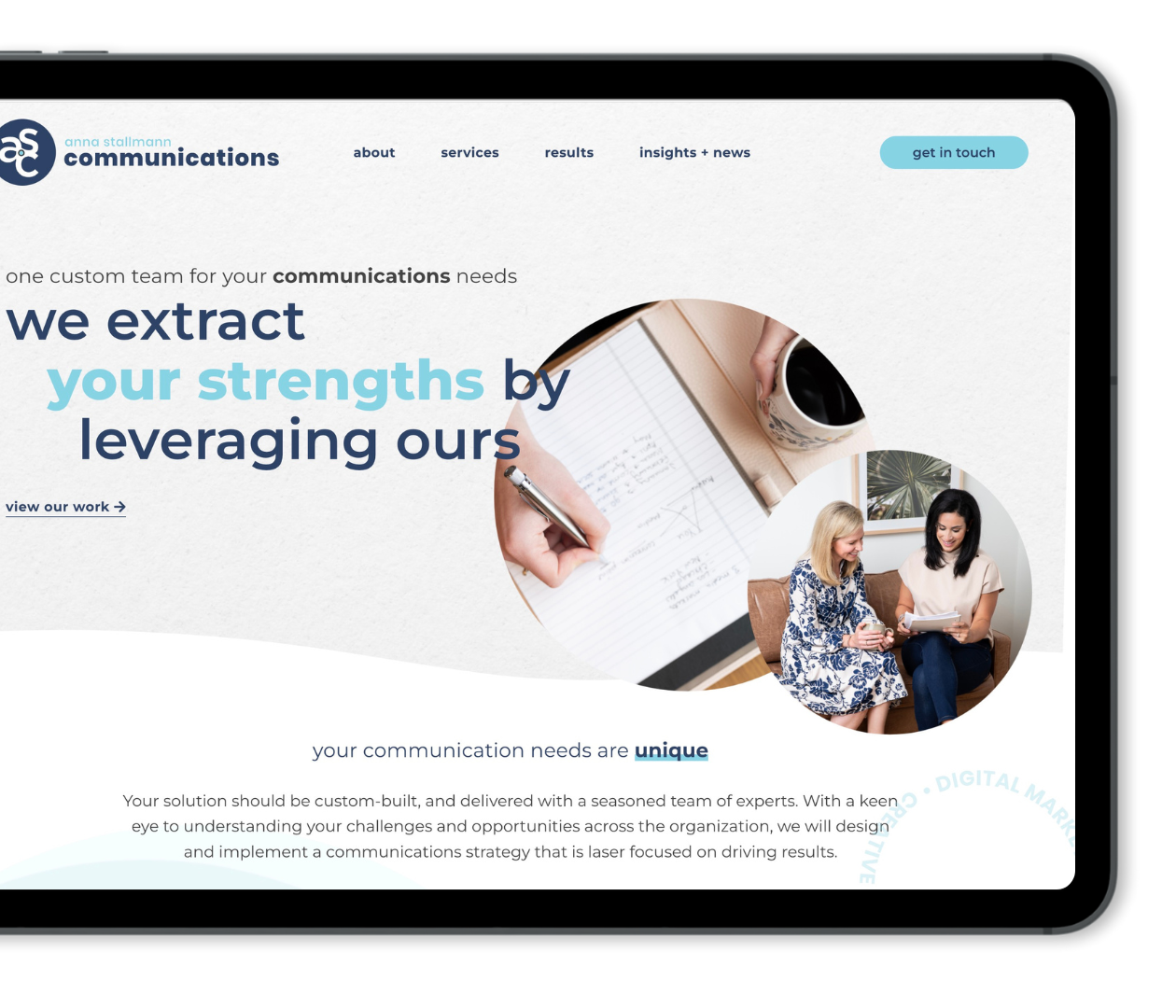
Most businesses treat their website as a marketing tool, and it is. It builds awareness, signals company credibility and brings in leads. But that’s only half of what a strategically built website can do for your business..
A website that is intentionally designed can also directly support your sales process, assist your internal team and reduce friction across daily operations. This is especially true for B2B companies and professional services firms, where sales cycles tend to be longer, more relationship-driven and dependent on trust built across multiple touchpoints. If your website is only marketing the business, you’re leaving a lot of sales value on the table.
Using Your Website as a Sales Tool
Start by looking at how your team actually closes deals. What questions come up on every single call? What proof or evidence do prospects need before they’ll move forward? What materials or follow-up emails is someone on your team sending manually, repetitively, to different prospects with similar messaging?
Once you’ve mapped that out, then you should ask: can your website take on some of that work?
A few examples of website features that support the sales process:
- A Case Studies or Results page that shows real-world outcomes, not just claims, gives prospects proof without your team having to compile it fresh for every conversation.
- A structured Services section that anticipates and answers the questions prospective clients ask most often can reduce the number of calls needed to simply explain what you do.
- A “Why Us” or Process page that walks through how you work builds trust before a prospect ever gets on a call.
- PDF downloads or gated resources give your sales team something concrete to share with potential clients rather sending yet another lengthy email.
When a website is built with these features, your sales team can send prospects directly to relevant pages instead of constantly explaining the same things on every sales call. This saves time and reinforces the value your company offers, because the potential clients are engaging with polished, relevant content.
Internal Use and Team Efficiency
The benefits of this type of intentional website structure aren’t limited to your sales team. A well-organized website can support operations across the business.
Clearly listing service tiers, pricing guidance or frequently asked questions cuts down on repeated emails your team would otherwise send individually. Even your careers or about page can so double duty: sharing the website with a prospective hire communicates your culture and values before they ever enter an interview.
The right website structure supports more than visibility; it can improve efficiency across your entire company, not just the departments that directly interact with sales prospects.
Bottom Line
You don’t have to choose between your website being a marketing asset or a sales tool. The most successful websites do both: they attract the right visitors and then do the work once those visitors arrive by answering questions, building trust and giving your team leverage. If your site isn’t doing that yet, it’s worth asking what one or two incremental additions, such as a case studies page, editable services section or a CRM-connected contact form can start doing the work for your sales cycle now.