Wake Forest University School of Professional Studies
The Wake Forest School of Professional Studies (SPS) launched as one of the newest schools at Wake Forest University, and like many academic programs in their early years, they built a website that served their immediate need of getting online and getting visible. What they launched with was functional, but it was built on a custom codebase that required specialized technical knowledge to update, was difficult for internal staff to manage, and was, in many ways, hanging by a thread.
In the years following their launch, SPS grew significantly. New programs were added, enrollment expanded and the school built a strong reputation. But their website had not kept pace. Edits required developer intervention for tasks that should have been straightforward, and a school with that kind of momentum deserves a website that showcases it.
The goal was not simply to modernize the look. It was to rebuild the foundation entirely, give the right people the ability to make updates, and put guardrails in place to keep the site consistent, streamlined, and ADA compliant.
THE Creative Strategy
Our Solution
Our first priority was structural so every architectural and content decision was made alongside their internal team, including intuitive editing, consistent templates and a content management system flexible enough to support the range of programs, faculty profiles, events and resources that SPS publishes on a regular basis.
At the same time, SPS needed a site that could do the heavy-lifting on enrollment. Graduate professional programs operate in a competitive market, and prospective students, typically working adults weighing significant investments of time and money, do extensive research before ever filling out a form. The website needed to serve that research process by clearly presenting program options, communicating career outcomes and making the path from interest to inquiry as frictionless as possible.
The content architecture was built around that journey. Program pages were designed to answer the questions prospective students actually ask and minimize unnecessary scrolling. Admissions and financial aid information was brought front and center. And the website was built to support ongoing content production, with an articles and resources section structured to build organic visibility over time across SPS’s varied areas of academic focus.
The Results
Post-Launch Impact
The new site launched in November 2025, replacing the legacy custom-built platform and the result is a site that SPS staff can update, expand and manage without needing to touch a line of code.
The first months of performance data cover the education industry’s slowest period for graduate enrollment, winter break through early spring. Despite that timing, the numbers are already telling a meaningful story about what the fall enrollment season will look like with the new platform in place.
Even in the off-season, the new site is attracting 22% more new visitors per day than the previous platform did across the same comparable window. In the first quarter of 2026 alone, before the fall enrollment push has meaningfully begun, the site recorded 4,868+ requests for information and 4,017+ application button clicks. For a graduate program where each enrolled student represents a multi-year relationship and significant tuition revenue, these are meaningful business metrics.
Conversion tracking built into the new website gives SPS clear visibility into where prospective students are in their decision process, which programs are generating the most interest and where the enrollment funnel is working best. That intelligence will only compound in value as the fall enrollment cycle accelerates.
22%
More New Visitors Per Day post-launch vs. pre-launch baseline
4868+
Requests for Information Clicks in Q1 2026 Jan – Mar, with peak enrollment season ahead
4017+
Application Button Clicks in Q1 2026 Jan – Mar, growing enrollment pipeline
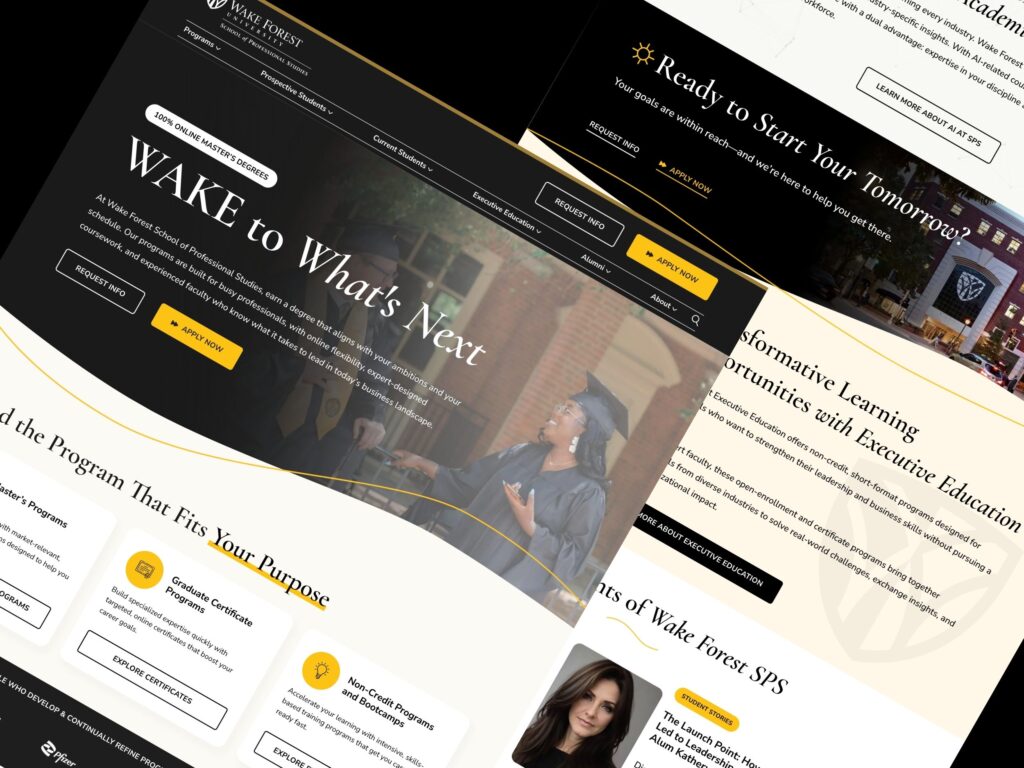
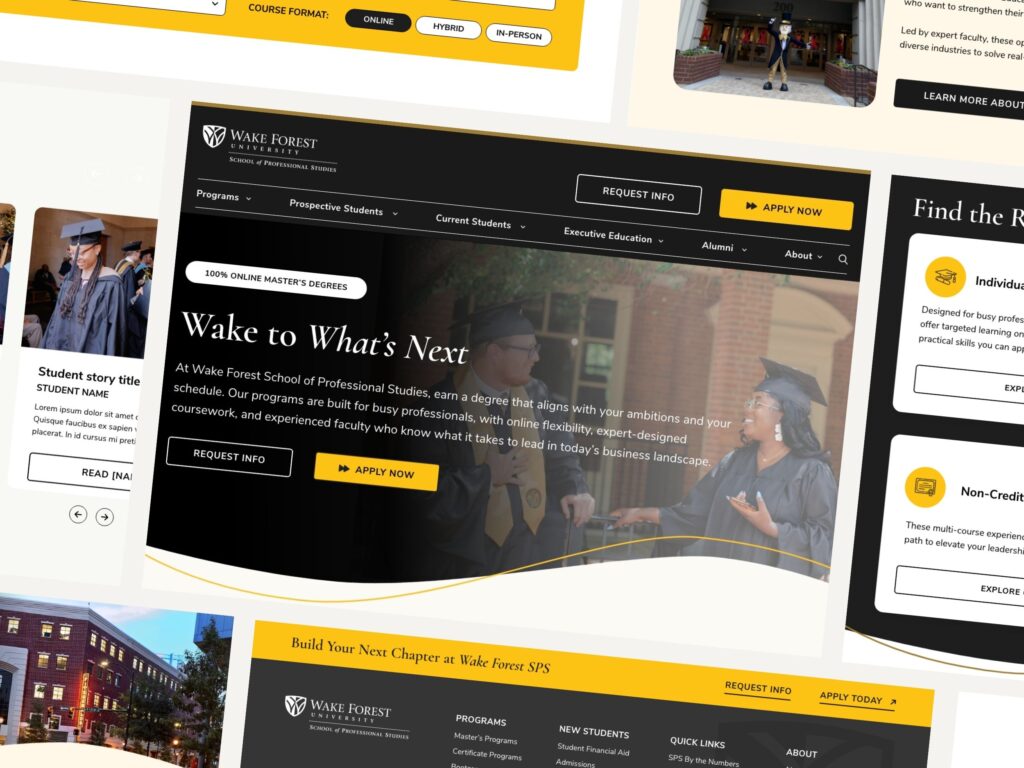
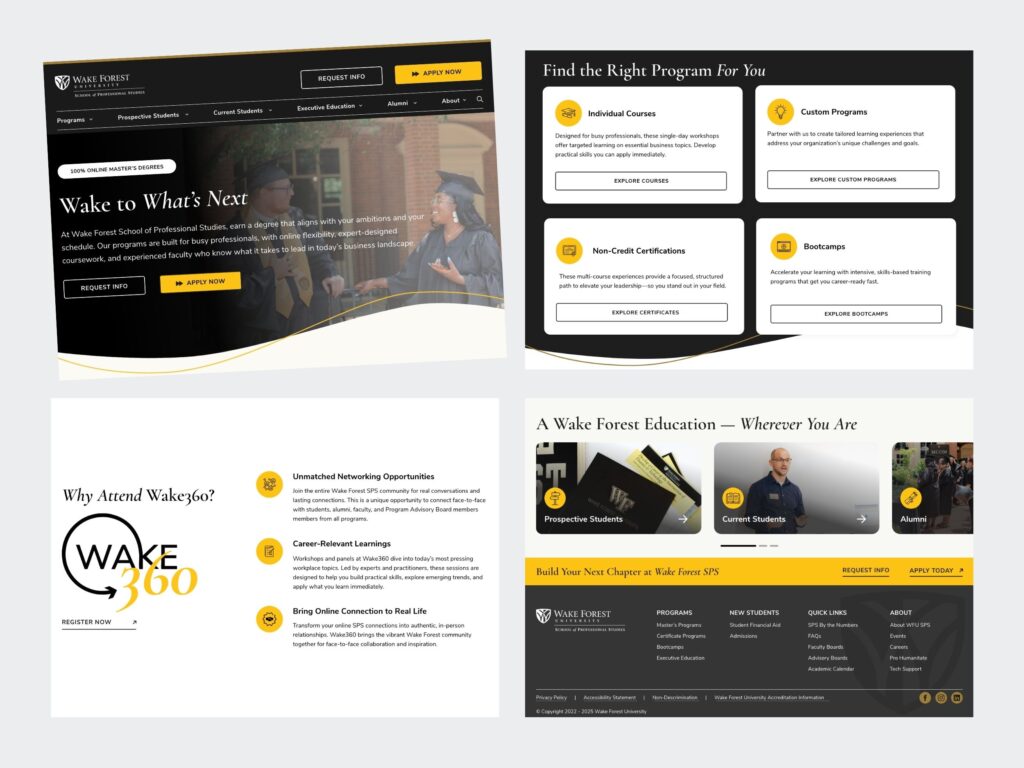
A dynamic showcase of Wake Forest University School of Professional Studies web pages. The design highlights online degrees, executive education, and career-focused programs.
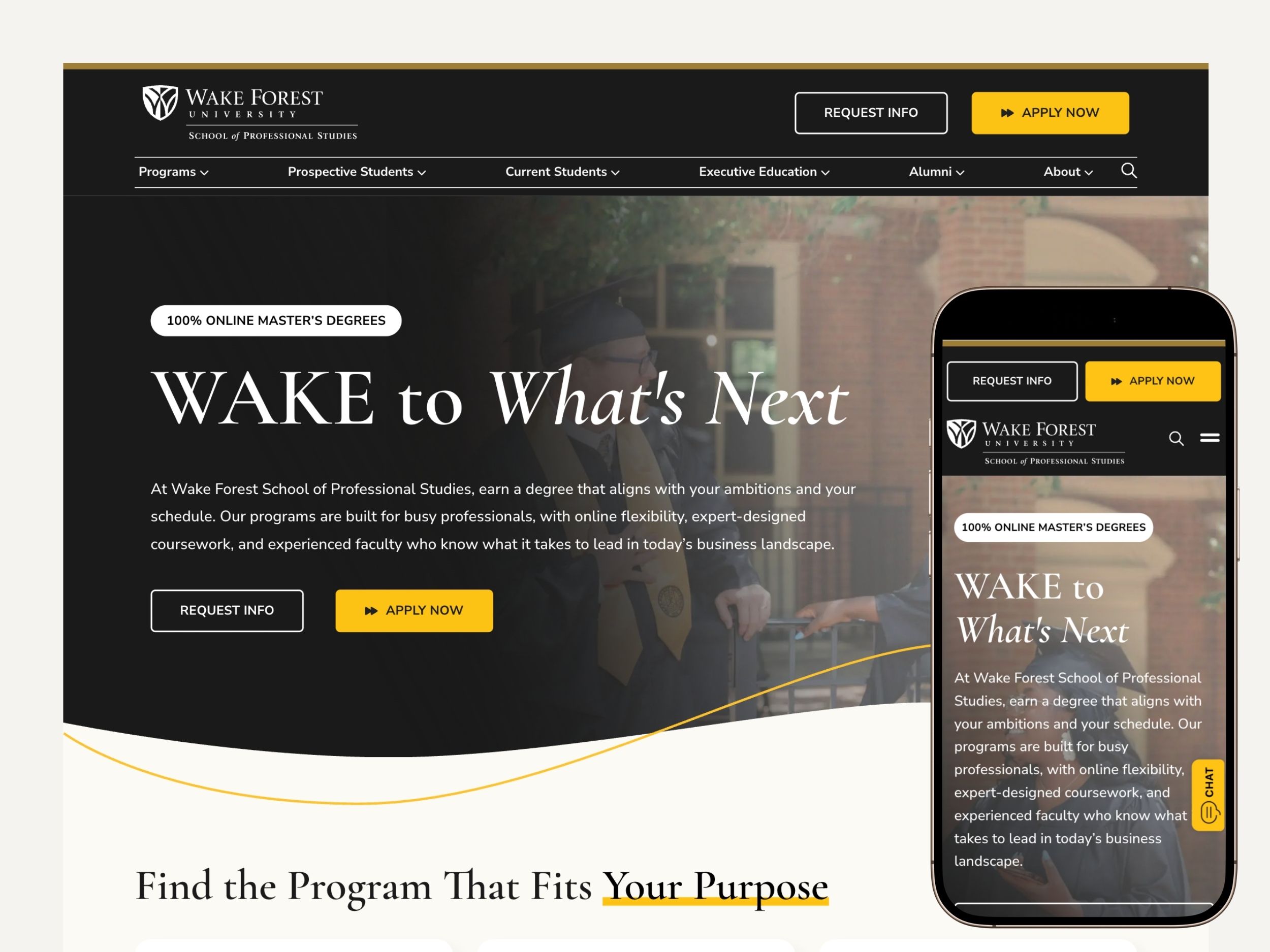
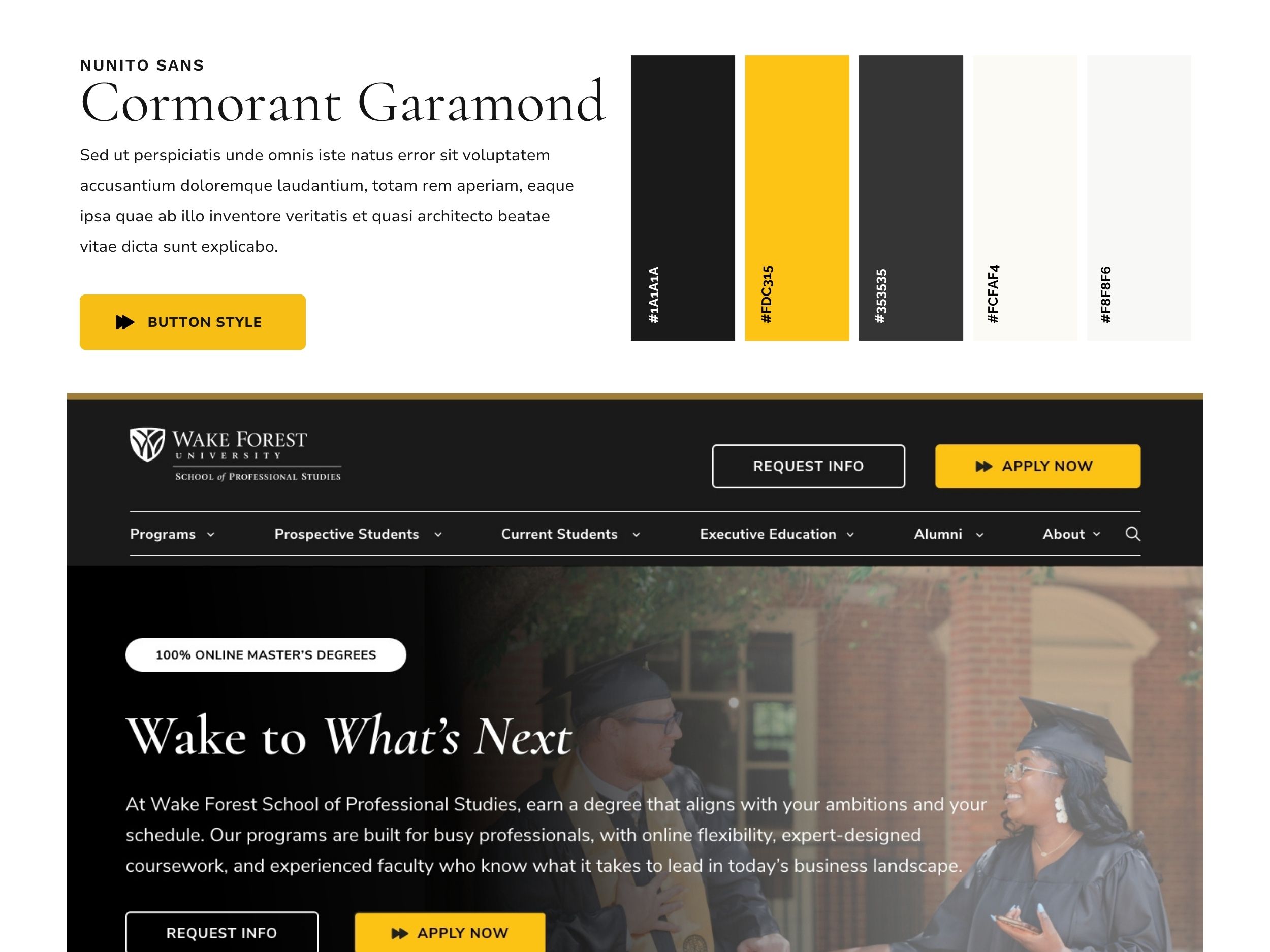
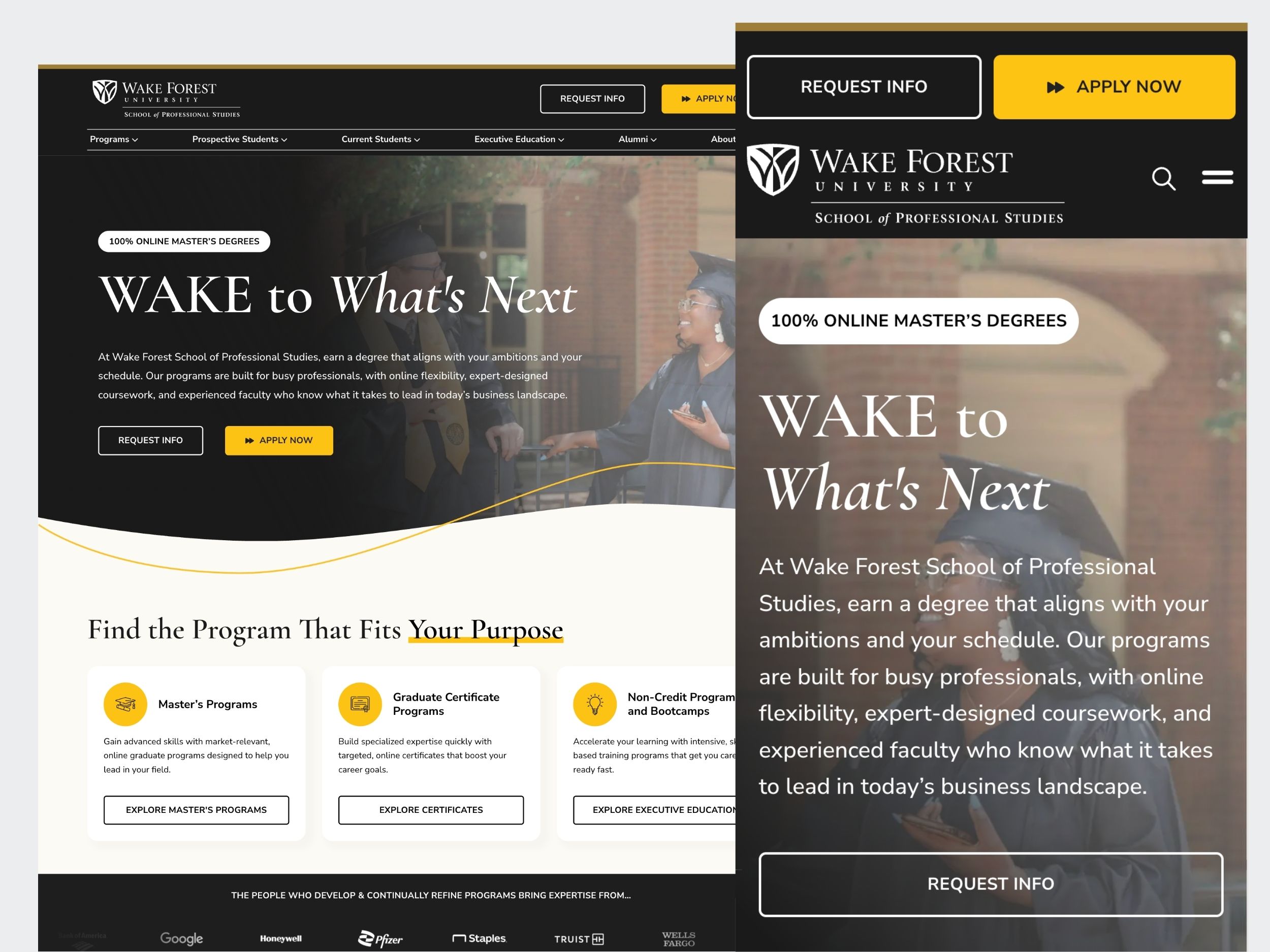
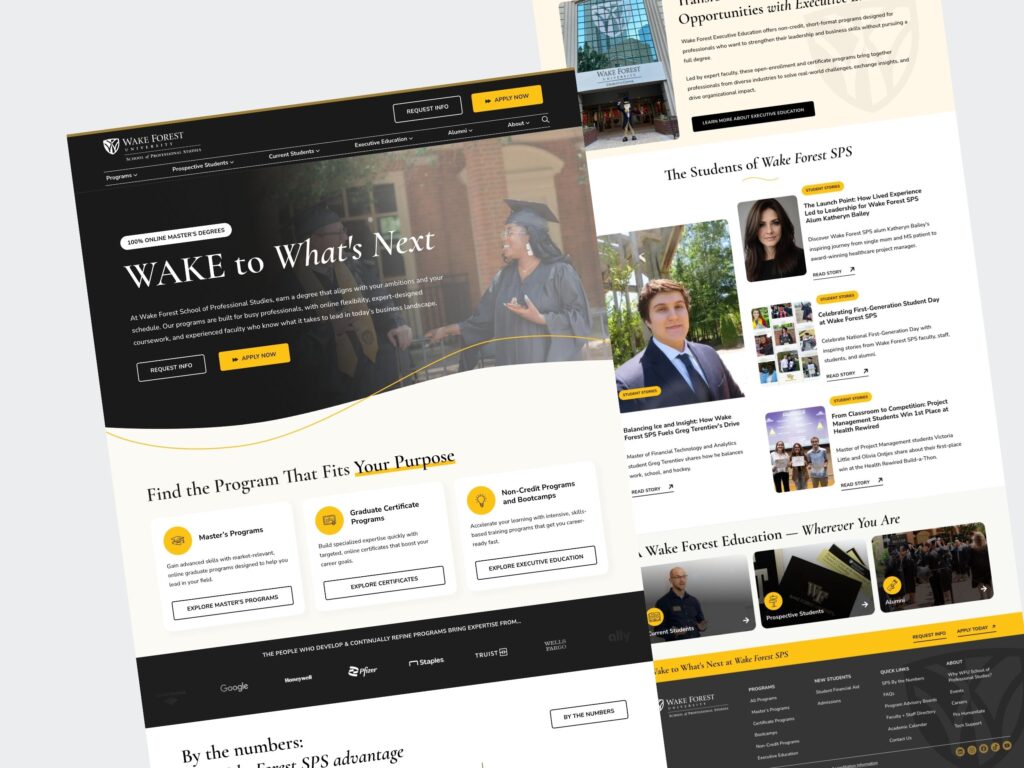
Homepage design for Wake Forest University’s School of Professional Studies. The layout highlights online master’s programs with bold calls to action and graduation imagery.
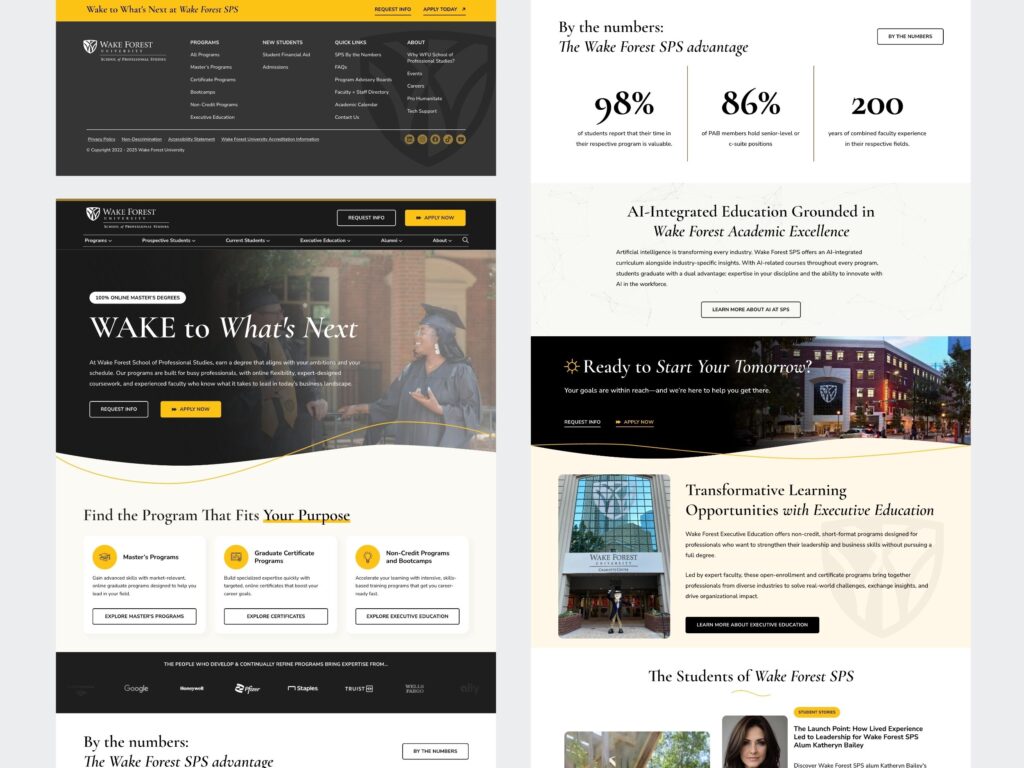
Explore what’s next at Wake Forest School of Professional Studies. Discover online degrees, AI-integrated education, and career-focused programs.
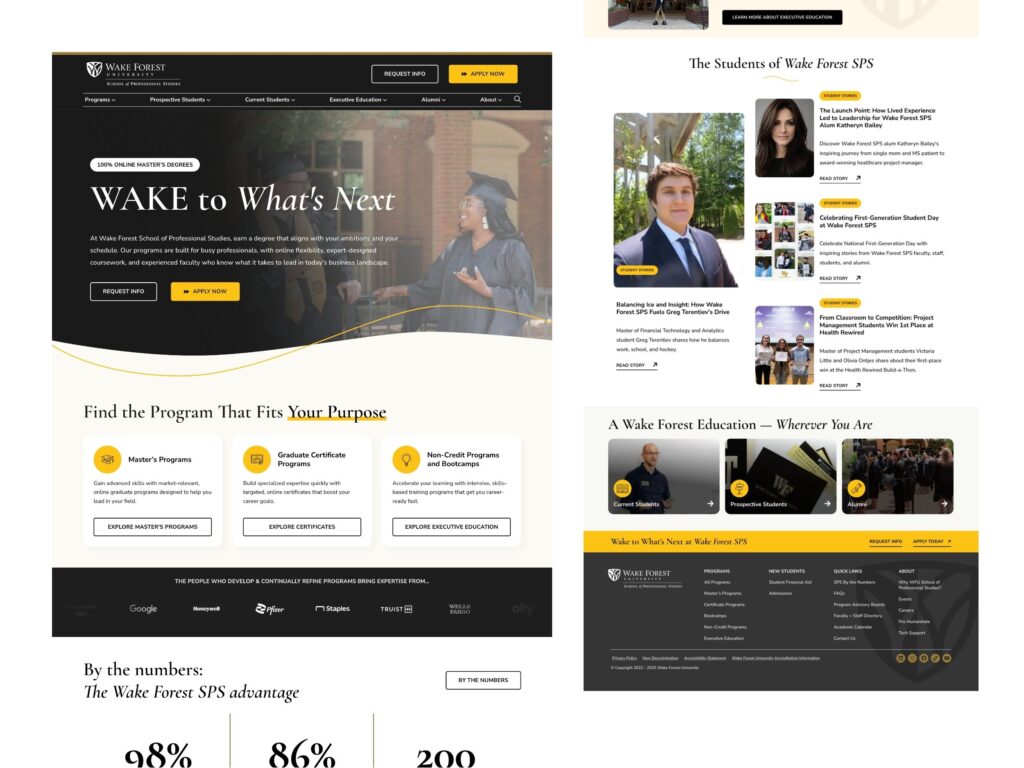
Wake Forest School of Professional Studies homepage featuring online master’s programs and student stories. Explore flexible programs designed for working professionals.
Wake Forest SPS empowers professionals to advance their education online. Explore programs, student stories, and executive education opportunities.
Explore online programs at Wake Forest School of Professional Studies. Flexible degrees, certificates, and bootcamps designed for working professionals.
Is it time for a website that propels your business forward?
Let’s talk about what’s next for your website and how we can help you get there.